
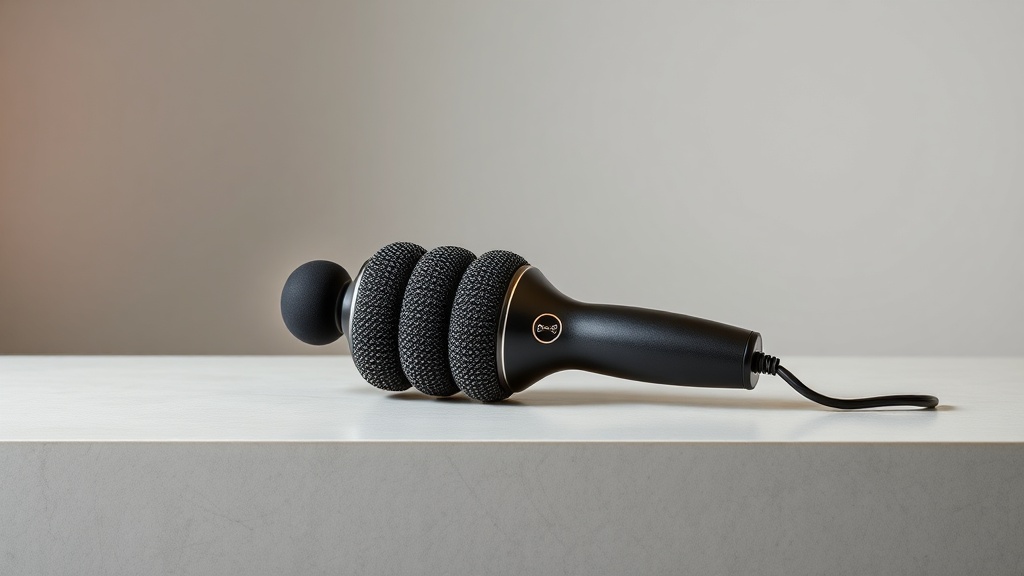
How Bob and Brad's PT Experience Shaped the D6 Pro
Percussion therapy research continues to expand, with studies examining its effects on everything from sprint performance to cognitive function to immune markers. A 2024 meta-analysis found moderate evidence supporting percussion therapy for acute pain reduction and range of motion improvement, with weaker but promising evidence for strength recovery. The research base, while growing, still has significant gaps regarding optimal protocols, long-term outcomes, and comparative effectiveness against other recovery modalities. Practitioners should view percussion therapy as one evidence-informed tool within a comprehensive recovery strategy.
The D6 Pro feels noticeably different from budget massage guns within seconds of first use. The percussion is crisp and defined rather than buzzy and diffuse. Each stroke feels intentional, with a clear beginning and end rather than a continuous vibration. This percussive clarity comes from the precise motor control and tight mechanical tolerances that distinguish well-engineered devices from mass-produced alternatives.
- bob and brad d6 pro review
Clinical Design Principles in a Consumer Massage Gun
USB-C charging has become the standard for modern massage guns, replacing proprietary charging docks and barrel connectors. The universal connector means users can share cables with phones, laptops, and other devices. Charging speeds have also improved, with many devices reaching full capacity in under two hours. The Bob and Brad D6 Pro supports USB-C fast charging and reaches a full charge in approximately 2.5 hours from empty.
The Bob and Brad D6 Pro's position in the market is strengthened by the brand's transparency about its manufacturing and quality control processes. Unlike many competitors who obscure their supply chain details, Bob and Brad have been open about their design decisions and the clinical reasoning behind them. This transparency reinforces the trust that their audience has built through years of watching their educational content.
The iliotibial band controversy in rehabilitation science centers on whether this thick fascial structure can actually be lengthened through direct treatment. Current evidence suggests that the IT band itself is too strong to be permanently deformed by foam rolling or percussion therapy. However, the muscles that connect to and tension the IT band, specifically the tensor fasciae latae and gluteus maximus, are quite responsive to percussion treatment. Reducing tension in these muscles effectively decreases IT band tightness and associated symptoms.
Therapeutic Speed Range and Why It Matters
The pectoralis minor, a small muscle beneath the pectoralis major that attaches to the coracoid process of the shoulder blade, is a frequent contributor to rounded shoulders and anterior shoulder impingement. When shortened, it tilts the shoulder blade forward and downward, narrowing the subacromial space. Percussion therapy applied to the pectoralis minor just below the collarbone, slightly lateral to the sternum, can effectively release this muscle. This treatment often produces immediate improvement in shoulder posture and overhead reach.
Amplitude stroke length in the D6 Pro measures 16mm, which places it among the highest in its price category. This generous amplitude means each percussion stroke travels deep enough to affect the muscle belly rather than just the surface fascia. Users feel a distinct thumping sensation rather than a superficial buzzing. The 16mm stroke is particularly effective for large individuals or those with significant muscle mass who need deeper penetration.
The carrying case included with this massage gun is constructed from semi-rigid EVA material that protects against drops and impacts. A heavy-duty zipper runs along the perimeter, and the interior features molded compartments for the device and all six attachment heads. The case is compact enough to fit in a gym bag or carry-on luggage without taking up excessive space. A small mesh pocket inside holds the charging cable securely.
Safety Features Informed by Physical Therapy Practice
Percussion therapy research continues to expand as universities and clinical research institutions investigate the mechanisms and outcomes of mechanical muscle treatment. Current evidence supports short-term improvements in range of motion, perceived muscle soreness, and local blood flow following percussion therapy. Long-term studies examining cumulative benefits of regular use are underway but have not yet produced definitive conclusions. The existing evidence base is sufficient to support percussion therapy as a beneficial recovery modality.
The Bob and Brad brand brings a unique advantage to the massage gun market because their products are designed with clinical knowledge in mind. Unlike tech companies or fitness brands that entered the space purely for commercial reasons, Bob and Brad draw on decades of hands-on patient care. This clinical foundation influences everything from the stall force calibration to the selection of attachment heads included with each device.
Using the D6 Pro for Home Physical Therapy Exercises
Seniors who combine percussion massage gun use with gentle stretching exercises report the most significant improvements in mobility and pain reduction compared to those who use either approach alone. The percussion therapy helps relax tight muscles and increase blood flow, creating a window of reduced tension during which stretching is more effective and comfortable. Physical therapists often recommend this combined approach as an optimal daily routine for older adults seeking to maintain their independence and quality of life through proactive musculoskeletal care.
Percussion therapy's effectiveness for improving flexibility has been documented in multiple studies comparing pre-treatment and post-treatment range of motion. Subjects receiving two minutes of percussion therapy showed measurably greater increases in flexibility compared to static stretching alone. The mechanism involves both mechanical tissue deformation and neurological relaxation of protective muscle tone. The D6 Pro at low to moderate speeds is particularly effective for pre-activity flexibility enhancement.
- bob and brad d6 pro review
What Physical Therapists Wish Every Massage Gun Had
Proper maintenance also includes periodically checking the attachment heads for signs of wear, such as cracking, deformation, or loss of elasticity. Worn attachment heads can reduce the effectiveness of treatment and may even cause discomfort during use. Most manufacturers sell replacement heads at reasonable prices, and swapping them out every six to twelve months of regular use keeps the device performing optimally.
The Bob and Brad D6 Pro's carrying case includes a small accessory pouch secured by a mesh zipper pocket. This pouch accommodates the USB-C cable, a spare attachment head, and small personal items like earbuds or keys. The main compartment has a velcro strap that secures the massage gun even if the case is turned upside down. Every detail of the case design suggests it was created by someone who actually travels with a massage gun.
Does the D6 Pro Deliver on Its Physical Therapy Promise
Travel with a massage gun requires awareness of airline regulations regarding lithium-ion batteries. Devices with batteries under 100 watt-hours are permitted in carry-on luggage by most airlines worldwide. The D6 Pro's battery falls well below this threshold, making it suitable for air travel without special permission. Checking the device in luggage is not recommended since the cargo hold's pressure and temperature fluctuations can degrade battery health.
Tendinopathy, whether in the Achilles, patellar, or rotator cuff tendons, presents a unique challenge for percussion therapy application. These conditions involve degenerative changes in tendon structure rather than acute inflammation, requiring a carefully calibrated approach. Low-to-moderate speed percussion applied perpendicular to the tendon can stimulate the mechanotransduction pathways that promote tendon remodeling. Aggressive high-speed treatment directly on an affected tendon should be avoided as it may exacerbate symptoms.
Fascial lines, as described by Thomas Myers in his Anatomy Trains model, connect distant body regions through continuous myofascial chains. Restriction in one area can produce symptoms far from the actual source of dysfunction. For example, tight calf fascia can contribute to lower back pain through the superficial back line. Understanding these connections helps users apply percussion therapy more strategically, treating the source of restriction rather than just chasing symptoms.