
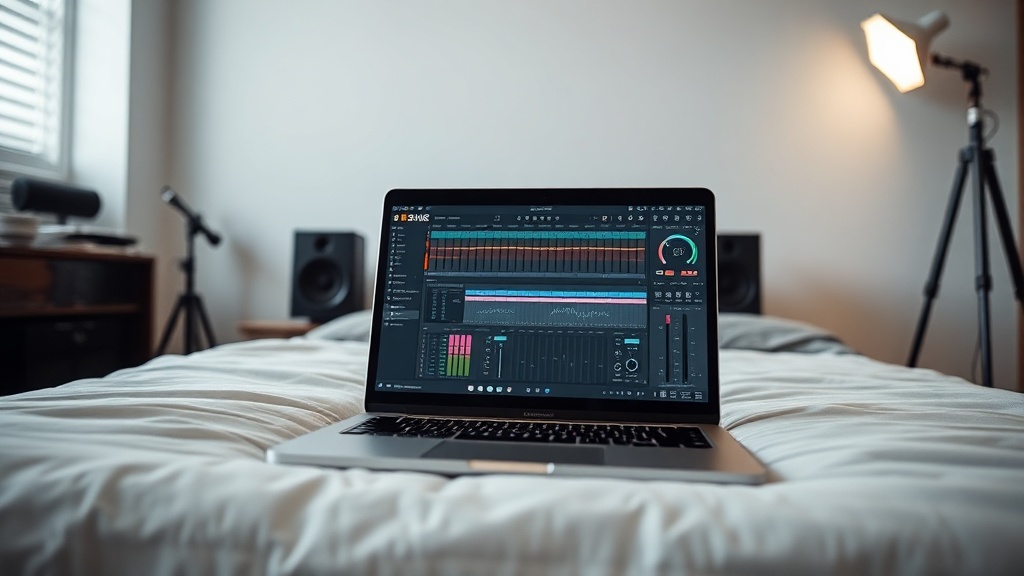
What to Expect From Budget Channel Strip Plugins
SoundShockAudio has observed that the resurgence of interest in vintage recording techniques has driven increased demand for channel strip plugins that faithfully emulate classic analog consoles. Producers influenced by the warm, organic sounds of recordings from the 1960s and 1970s are seeking the tonal character that defined that era. Plugin developers have responded with increasingly accurate emulations of vintage equipment, including models that capture the specific aging characteristics of vintage components. This trend suggests that demand for authentic analog-modeled channel strip plugins will continue to grow.
The concept of plugin instance management becomes important when channel strip plugins are loaded on every track in a large session. Managing dozens of instances requires an organized approach to naming, preset selection, and bypass status. Many engineers develop color-coding systems that indicate which tracks have active channel strip processing and which have been bypassed. This organizational discipline prevents the confusion that can arise when navigating complex sessions with many identical plugin instances.
Phase alignment between parallel tracks becomes more complex when channel strip plugins with different latencies are used. If a drum close mic and room mic are processed through different channel strips with different processing delays, the phase relationship between them changes. Most modern DAWs compensate for plugin latency automatically, but it is worth verifying that phase-critical signals remain aligned after channel strip processing. Zooming into the waveform display at the sample level reveals any phase misalignment.
Top Channel Strip Plugins Under Thirty Dollars
The concept of monitoring calibration ensures that the levels displayed on meters correspond to a consistent sound pressure level in the listening environment. Professional studios calibrate their monitoring systems so that zero VU on the meter produces a specific SPL at the listening position, typically 83 or 85 dB. This calibration provides a consistent reference that helps engineers make reliable volume and dynamics decisions. Home studio producers can approximate professional calibration using SPL meters and reference recordings.
Channel Strip Plugins in the Fifty Dollar Range
Multi-microphone drum recording techniques benefit enormously from channel strip plugins that include phase alignment and polarity controls. When multiple microphones capture the same drum kit from different positions, timing differences between microphones can cause phase cancellation that thins the sound. A channel strip with a sample-accurate delay control allows you to align the arrival times of different microphones. Combined with polarity inversion, these phase tools ensure that all drum microphones sum constructively for a full, powerful sound.
The output section of a channel strip plugin often includes a fader and sometimes a VU meter or LED meter bridge. This stage is crucial for maintaining proper gain staging between the channel strip and subsequent plugins in the chain. Many engineers set the output level to match the input level, ensuring unity gain through the channel strip. This disciplined approach prevents level creep that can accumulate across dozens of tracks and cause problems at the mix bus.
The threshold setting on a channel strip compressor determines the level at which compression begins to take effect. Setting the threshold too low causes constant compression that squashes the natural dynamics of the performance. Setting it too high means the compressor rarely engages, providing little benefit. The optimal threshold depends on the input level, the desired amount of gain reduction, and the musical context. Most engineers aim for two to six dB of gain reduction on individual tracks within a channel strip.
Subscription Services With Channel Strip Plugin Access
The practice of developing personal preset libraries for common mixing scenarios accelerates workflow without sacrificing quality. Creating and saving starting-point presets for vocal EQ, drum compression, bass processing, and other common tasks provides immediate access to tested settings. These personal presets reflect your individual sonic preferences and the specific tools in your arsenal. Maintaining and refining these presets over time creates an increasingly effective set of starting points that grows more valuable with each project.
The concept of frequency response curves describes how a processor affects different frequencies across the audible spectrum. A flat frequency response means the processor treats all frequencies equally, neither boosting nor cutting any particular range. A colored frequency response means the processor introduces frequency-dependent changes that alter the tonal balance of the audio. Understanding the frequency response of your processing tools helps you predict their effect on different source materials.
The relationship between monitoring volume and bass perception affects how engineers handle low-frequency content during mixing. At lower listening volumes, the Fletcher-Munson effect reduces the perceived level of bass frequencies, potentially leading engineers to over-boost the low end. At higher volumes, bass perception is more accurate, but extended loud listening causes fatigue. Professional engineers address this by calibrating their monitors, mixing at consistent moderate volumes, and periodically checking bass decisions at higher volumes.
Getting Professional Sound on a Home Studio Budget
Home producers working with limited budgets should focus on developing their ears and mixing technique before investing in premium processing tools. The fundamental skills of gain staging, frequency management, and dynamic control translate across any set of tools. Free plugins from developers like Analog Obsession, TDR, Airwindows, and the native processing included with every major DAW provide sufficient quality for professional results. The investment in skill development pays far greater dividends than the investment in expensive plugins.
The power supply ripple and regulation characteristics of analog mixing consoles contribute to the subtle low-frequency modulation that gives analog equipment its warm, living quality. Some channel strip plugins model this power supply behavior, introducing extremely subtle level and harmonic variations that occur at the mains frequency. While individually imperceptible, these modulations add up across multiple channel strip instances to create a sense of analog movement and life. This level of modeling detail distinguishes the most accurate console emulations from simpler designs.
- channel strip plugins